
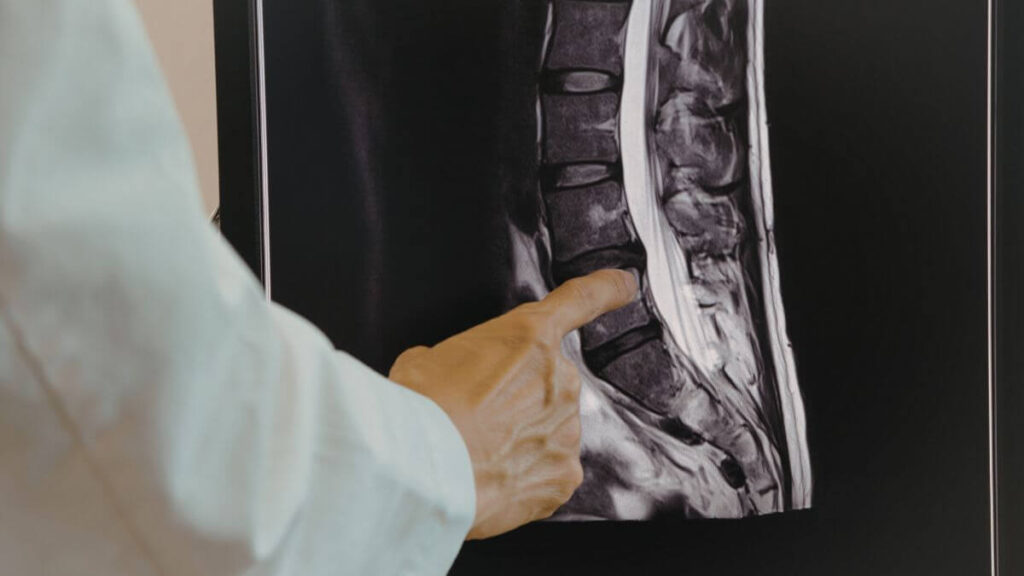
Spinal decompression therapy is a non-surgical treatment that gently stretches the spine to reduce pressure on spinal discs and nerves. At Highland Family Chiropractic, chiropractic spinal decompression is used to improve spinal alignment, support disc recovery, and help reduce persistent back or neck discomfort.
What Is Spinal Decompression Therapy?
Spinal decompression therapy is a treatment designed to relieve pressure within the spinal discs. Spinal discs are soft, cushion-like structures that sit between each vertebra. Their main role is to absorb shock and allow the spine to move smoothly.
Over time, injury, repetitive strain, or age-related degeneration can cause these discs to compress, bulge, or herniate. When this occurs, nearby spinal nerves may become irritated or compressed. This can lead to symptoms such as back pain, numbness, tingling, or weakness.
Chiropractic spinal decompression works by applying controlled traction to the spine. The treatment gently stretches the vertebrae, creating space between them. This reduction in pressure allows the discs to decompress and may help reposition disc material away from irritated nerves.
How Does Chiropractic Spinal Decompression Work?
Chiropractic spinal decompression uses a specialized motorized table designed to stretch the spine in a controlled and gradual way. The therapy alternates between stretching and relaxation phases, which creates a pressure change within the spinal discs.
This process can create what researchers refer to as negative intradiscal pressure. Negative pressure inside the disc helps draw fluid, oxygen, and nutrients back into the disc structure.
These nutrients are important because spinal discs rely on diffusion rather than direct blood supply. Improved nutrient flow can support disc hydration and healing, which may reduce inflammation and discomfort.
By relieving pressure and encouraging disc rehydration, spinal decompression therapy helps restore healthier movement in the spine.
To learn more about this treatment, visit the spinal decompression therapy service page.
What Conditions Can Spinal Decompression Therapy Help Address?
Spinal decompression therapy is often recommended for conditions involving disc compression or nerve irritation. These problems commonly develop due to injuries, repetitive strain, or gradual degeneration of the spine.
Common conditions addressed with spinal decompression include:
Herniated Discs
When the soft center of a disc pushes through its outer layer, it can press against spinal nerves.
Bulging Discs
A bulging disc occurs when the disc protrudes outward but does not rupture. This can still place pressure on nearby nerves.
Sciatica
Sciatica occurs when the sciatic nerve becomes compressed, often due to a herniated or bulging disc.
Degenerative Disc Disease
As discs lose hydration and height over time, they may become less effective at absorbing shock.
Chronic Neck or Back Pain
Disc compression and spinal misalignment can contribute to persistent discomfort and reduced mobility.
Spinal decompression therapy helps relieve pressure associated with these conditions by creating space in the spinal column.
Why Is Reducing Disc Pressure Important for Spine Health?
Disc pressure plays a major role in spinal health and nervous system function. When pressure builds inside the spinal column, discs may compress and nerves may become irritated.
Excess pressure in the spine can lead to several problems:
- Reduced disc hydration
- Inflammation around spinal nerves
- Muscle tightness and restricted movement
- Ongoing back or neck pain
Spinal decompression therapy helps address these issues by gently separating the vertebrae. When the vertebrae move apart slightly, pressure inside the discs decreases. This change allows discs to absorb fluids and nutrients more effectively.
Healthier discs provide better cushioning between vertebrae, which improves spinal mobility and reduces stress on surrounding tissues.
What Happens During a Spinal Decompression Therapy Session?
A spinal decompression session follows a structured and controlled process. The goal is to safely stretch the spine while minimizing strain on surrounding muscles.
A typical session includes the following steps:
Evaluation and Assessment
A chiropractor evaluates symptoms, spinal alignment, and medical history to determine if spinal decompression therapy is appropriate.
Positioning on the Decompression Table
The patient lies comfortably on a specialized table while straps secure the body to guide spinal movement.
Controlled Traction Cycles
The table gently stretches the spine and then releases it in repeated cycles. This motion helps create pressure changes inside the discs.
Session Duration
Most sessions last between 20 and 30 minutes. Multiple sessions are typically recommended to allow the decompression process to work progressively.
Many patients find the treatment comfortable because the stretching occurs slowly and predictably.
How Long Does It Take for Spinal Decompression Therapy to Work?
Results from spinal decompression therapy vary depending on the severity of the condition being treated. Some individuals notice symptom relief within several sessions, while others experience gradual improvement over several weeks.
Spinal discs heal slowly because they have limited blood supply. Consistent decompression sessions allow the disc to repeatedly absorb fluids and nutrients that support repair.
Following the recommended treatment schedule is important for achieving the best possible results from spinal decompression therapy.
When Should Someone Search for Spinal Decompression Therapy Near Me?
Many people begin searching for spinal decompression therapy near me when spinal pain becomes persistent or begins interfering with daily activities.
Signs that spinal decompression may be worth discussing with a chiropractor include:
- Persistent lower back or neck pain
- Pain radiating into the arms or legs
- Tingling or numbness in extremities
- Reduced range of motion
- Pain that worsens when sitting or standing for extended periods
A professional spinal evaluation can determine whether spinal decompression therapy may help reduce pressure on the spine and improve mobility.
Find Relief from Spinal Pressure with Chiropractic Care
If disc pressure, nerve irritation, or persistent back pain is affecting your daily life, spinal decompression therapy may help support recovery and improve spinal movement. Highland Family Chiropractic provides chiropractic spinal decompression designed to relieve pressure on the spine and restore healthier motion. Schedule your consultation today to learn whether spinal decompression therapy may help address your symptoms.